
Conditions we help with
Disc injury care in Crosslake
A scan report can read frightening and still not be the reason you hurt. Chiropractic care in Crosslake for the discs of the low back and neck, built around what your exam actually shows. Serving the Brainerd Lakes region from our Crosslake office.
Book Online Call (218) 866-5436
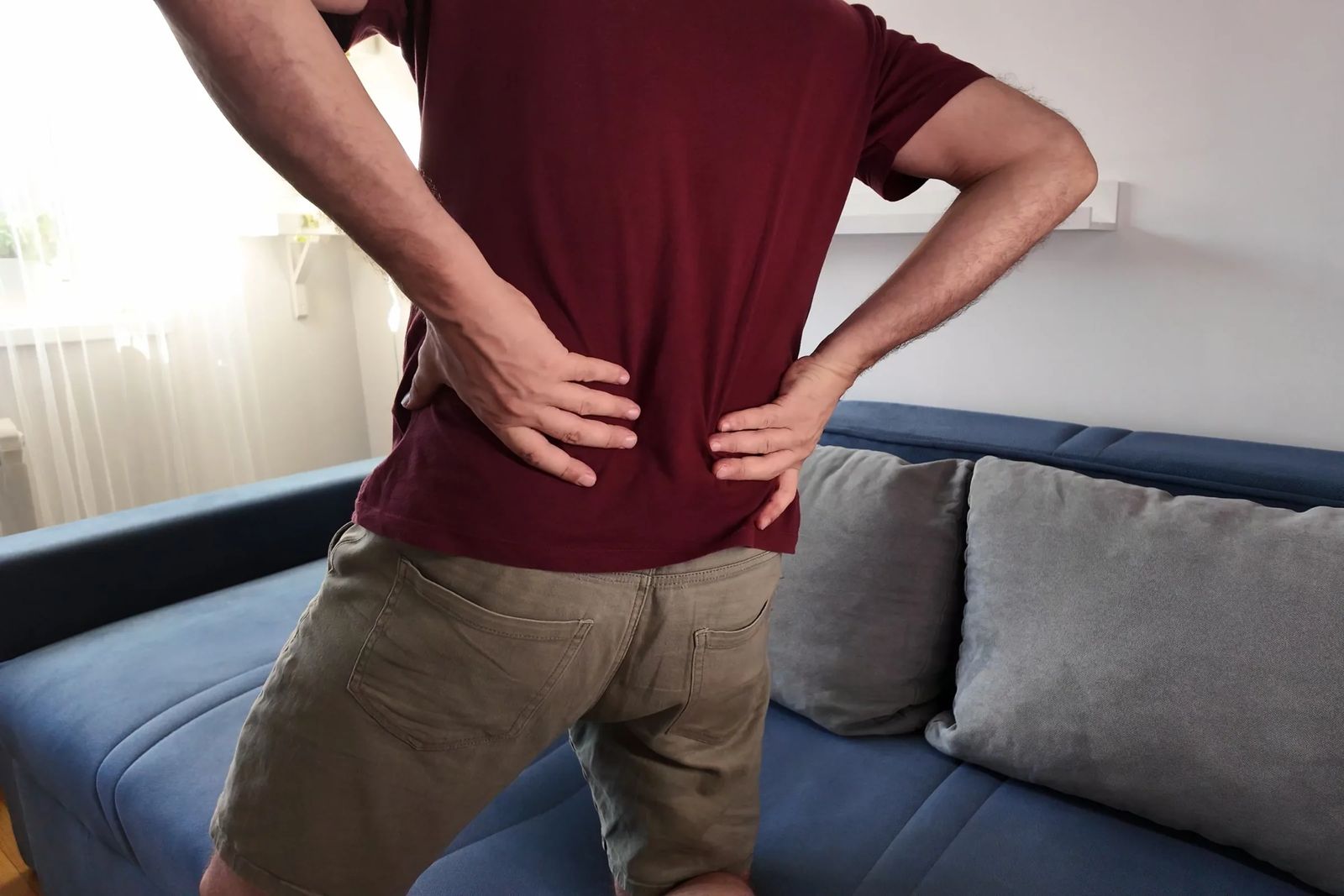
A disc is the cushion between two vertebrae, and a disc injury means that cushion has been strained, has bulged, or has pushed out far enough to irritate a nearby nerve. Chiropractic care works on the biomechanics around it: restoring movement to the joints above and below, easing the guarding that builds up, and giving you the positions and movements that let an irritated disc calm down.
No phrase frightens people quite like a disc on a scan report. Most of that fear is not earned. Here is a plain-language look at what a disc injury actually is, what the words on the report do and do not mean, how chiropractic care can help, and when it is something that needs a surgeon rather than a chiropractor.
What causes a disc injury?
Discs sit between the vertebrae and act as spacers and shock absorbers. They are tough, and they are not fragile, but they do respond to load. A disc problem is usually the sum of years of loading plus one moment that tipped it: the lift, the twist, the long drive after a long week. Bulging, herniation, and degeneration are different points on the same spectrum, not different diseases.
The usual contributors we see in Crosslake:
- Prolonged sitting, which loads the front of the disc hour after hour.
- Lifting and twisting under load, especially with a back that is already tired.
- Years of repetitive bending in a job or a sport.
- Normal age-related change, which happens to everyone and hurts almost nobody by itself.
- A back that has been guarding an old problem and quietly overloading one level.
Here is the part the report will not tell you: disc bulges and degeneration show up on the scans of enormous numbers of people who have no pain at all. Findings are not the same as the cause. What matters is whether the disc on your scan explains the pain in your body, and that is an exam question, not an imaging one.
How does chiropractic care help with a disc injury?
Chiropractic care works on the biomechanics around the disc. Gentle, specific adjustments restore movement to joints that have stiffened and guarded, which changes how load is shared across the segment. Alongside the adjustments, you get the positions and movements that let an irritated disc settle rather than staying provoked all day.
In practice, a course of care usually blends a few things:
- Specific adjustments to the subluxated vertebra at the level involved, matched in force to a segment that is already irritable.
- Positions and movements that help reduce your pain.
- Practical changes to sitting, lifting, and driving, so the disc stops being reloaded every day.
The first goal is to settle this episode, then give you the movement and habits that keep the disc out of the conversation.
How a subluxation can affect the nerves involved
Each disc sits right next to the openings where nerve roots leave the spine. When the vertebra above or below an injured disc is subluxated, that opening can narrow and add pressure on the nerve root at that level, which can change the messages it carries to the back, arm, or leg. Dr. Gonstead's work centered on this relationship between the vertebra, the disc, and the nerve.
What does care cost?
No referral is needed to book, and we will go over the costs with you up front so there are no surprises. Costs depend on what your back needs, and we will always walk you through it in plain numbers first. We don't bill insurance, but we can give you an itemized superbill you can submit to your insurance.
What to expect
- No referral needed to book a first visit.
- We go over the costs with you before anything begins, so you know what to expect.
- Clear, up-front pricing before care begins.
We cannot promise a specific outcome; every disc is different. What we can promise is an honest look and a straight answer.
Disc questions we hear most
Is chiropractic care safe with a disc injury?
For most people with a common, mechanical disc problem, gentle chiropractic care has a strong safety record. An irritated disc gets a lighter hand, so the first visit is a careful history and check, and low-force options are used while it is acute. If your exam shows something that should be seen medically or surgically first, we will tell you rather than start care.
My scan says bulging disc. Does that mean surgery?
Usually not. Most disc problems settle with conservative care and time, and surgery is the exception rather than the path. It also helps to know that bulges and degeneration appear on the scans of large numbers of people who feel perfectly fine, so the words on the report are not a verdict. What matters is whether that disc explains your symptoms.
How long until it settles?
Many people notice a meaningful change within a few weeks, though a disc is slower than a joint sprain and it is honest to say so. It depends on how irritable it is and how much of your day reloads it. After your first visit we will give you a realistic window rather than a guess.
Should I be resting?
Not flat in bed. Long rest tends to stiffen the back and slow things down for most people. Gentle movement, frequent position changes, and avoiding the specific thing that provokes it usually beat stillness. We will give you the movements that suit your pattern, because the wrong ones can wind an irritated disc up.
When is a disc injury an emergency?
Weakness that is getting worse rather than better, numbness through the saddle area, pain down both legs at once, or any change in bladder or bowel control needs urgent medical attention the same day. Those are rare, and they are not something to bring to a chiropractor first. Everything short of that is worth a conversation.
A scan report is not a verdict.
Come as you are, we will take it from there.